Informazione importante
Questo articolo è scritto da Alfio Nicolosi, Distributore Indipendente PM-International. I contenuti rappresentano opinioni personali ed esperienze del distributore e non costituiscono comunicazioni ufficiali di PM-International AG. FitLine® è un marchio registrato di PM-International AG.
Cards on the table right away: my name is Alfio Nicolosi and I'm an Independent PM-International (FitLine) Distributor. I've never worked for Amway or for Herbalife, and obviously I'm not 100% neutral — nobody is.
That's exactly why I've written a comparison based only on public information (financial statements, official websites, well-documented industry facts), with no cheap shots and none of the usual trick where an article demolishes two companies just to sell you a third. Amway and Herbalife are two enormous businesses, with decades of history and millions of customers: they deserve a serious look.
If you end up reading a couple of paragraphs about FitLine at the end, it'll be because I earned them by being straight with you through everything that came before. No hard sell.
Amway vs Herbalife: the differences at a glance (comparison table)
| Feature | Amway | Herbalife |
|---|---|---|
| Founded | 1959, Ada (Michigan, USA) | 1980, Los Angeles (USA) |
| Ownership | Privately held (Van Andel and DeVos families) | Publicly traded (NYSE) |
| Revenue (order of magnitude) | Around $7–8 billion | Around $5 billion |
| International footprint | Over 100 countries and territories | Around 90 countries |
| Catalog breadth | Very broad: supplements, cosmetics, home care, water treatment | Focused: nutrition, meal replacements, sports, personal care |
| Flagship nutrition brand | Nutrilite | Formula 1 and the Herbalife line |
| Supply chain | Company-owned farms and growing operations (Nutrilite) | Company plants plus manufacturing partners |
| Typical channel | Direct sales and the distributor's personal online store | Direct sales + Nutrition Clubs in the markets where they operate |
| Business model | Multi-level marketing | Multi-level marketing |
| Perceived strength | Variety and vertical integration | Simplicity and product recognition |
These figures are orders of magnitude the companies have communicated publicly and they shift from year to year: treat them as reference points, not as accounting data.
Who they are: history and scale of the two companies
Amway was founded in 1959 in Michigan by Jay Van Andel and Rich DeVos. It's one of the oldest and most structured direct-selling companies in the world, and it's still privately held (not listed): it doesn't have to answer to shareholders every quarter, which gives it a long-term perspective. Its nutrition brand, Nutrilite, has even older roots — it traces back to Carl Rehnborg's work in the 1930s. Amway grows some of its own raw materials on company-owned farms (United States, Mexico, Brazil), which is a rare thing in this industry.
Herbalife was founded in 1980 in Los Angeles by Mark Hughes. Today it's a NYSE-listed company: that means its financials, margins and problem areas are public and readable by anyone, which paradoxically makes it one of the most financially transparent MLM companies out there. Its identity is more concentrated: the signature product, the Formula 1 shake, is known worldwide, and in many countries the company has built a network of Nutrition Clubs — physical spaces where consumers use the products on site.
One piece of context, because you'll find it anyway if you search: both companies have, at different points, faced scrutiny from US authorities over their sales model (Amway in the late 1970s, Herbalife in the mid-2010s), and in both cases a revision of internal rules followed. These are public, documented facts, not accusations: both companies operate legally in the US, in Europe and in dozens of other markets.
💬 Not sure if FitLine is right for you?
Message me on WhatsApp: I reply personally and I'll tell you honestly whether it makes sense for your goal — even when the answer is no. No strings attached.
Or find out how to get 20% off your products.
The products compared (Amway's Nutrilite vs the Herbalife line)
This is where the most concrete difference lies, and it's a difference of philosophy.
Amway / Nutrilite bets on breadth. You'll find multivitamins, standalone vitamins and minerals, plant-based protein powders, botanical extract supplements, plus entirely separate lines (Artistry cosmetics, home cleaning products, water filtration systems). The message is: one supplier for many categories. The stated advantage is control of the chain from the field to the finished product.
Herbalife bets on simplicity and daily ritual. The heart of the offer is the powdered meal replacement, flanked by proteins, teas, aloe and a dedicated sports line. In the European Union, meal replacements are governed by specific composition rules: that's a precise regulatory framework, not a marketing promise.
And the protein? Amway protein powder vs Herbalife
This is one of the most-searched questions. Honestly: there is no magic protein powder. What matters is reading the label and comparing three things:
- Protein source (soy, pea, whey, plant blends) and how well you personally digest it.
- Grams of protein per serving — and how big that serving actually is.
- Added ingredients: sugars, flavourings, sweeteners, thickeners.
As far as what can legitimately be said in the EU, the same authorised claim applies to every brand: protein contributes to the growth and maintenance of muscle mass. That isn't an Amway advantage or a Herbalife advantage: it's a property of the nutrient, full stop. Be wary of anyone, from any company, promising you more.
Same story for micronutrients: vitamin C contributes to the normal function of the immune system, vitamin D contributes to the maintenance of normal bones, magnesium contributes to the reduction of tiredness and fatigue. These are EU claims tied to the nutrients, valid for every brand that contains them in significant amounts.
Prices and cost of entry
Prices change by country, promotion and year, so what follows are indicative orders of magnitude as of 2026 — always check the official sites.
As a customer:
- Amway (Nutrilite): a multivitamin or a tub of protein generally sits in the mid-to-high bracket compared with the grocery store, in line with premium pharmacy brands.
- Herbalife: a container of Formula 1 typically covers a set number of servings; cost per serving is the right number to look at, not the price of the container.
In both cases the list price is higher than a supermarket product: part of the price funds the distribution network. That's a structural fact of the model, not a hidden trick.
As a distributor:
- Amway: there's an annual registration fee (in Europe, typically a few tens of euros) which gives you access to your personal online store and the tools.
- Herbalife: there's a paid starter kit (also in the range of a few tens of euros) which includes products and materials.
In neither case do you have to buy inventory to get started, and both companies have buy-back policies for unsold product. If anyone asks you to buy large quantities of stock up front to move up a level, that's a red flag — whatever the brand.
The business model (MLM): how it works in both
Amway and Herbalife share the same underlying structure: you're an independent distributor, you buy products at a discount, you resell them or consume them yourself, and you can introduce other people who in turn become distributors. You earn on the sales margin and on bonuses tied to the product volume your network generates.
Here I have to be brutally honest, because this is where the industry does the most damage:
- Most distributors earn modest amounts or close to nothing, and plenty break even or lose money once you count personal purchases and expenses. That's true of Amway, of Herbalife, and of the company I work with too.
- Results depend entirely on the effort, time, sales ability and circumstances of the individual person. There are no guarantees of any kind.
- Both companies publish official income disclosure statements: before you sign anything, go find them and read them. If the person presenting the opportunity doesn't show them to you, ask.
- A sales business is, in every respect, a business — with tax and administrative obligations. It is not passive income.
If someone shows you screenshots of earnings, cars or trips as a selling point, you're looking at marketing, not information.
Amway pros and cons
Pros
- A very long track record and real solidity: over 65 years in business.
- A very broad catalog: if you want variety, it's unbeatable of the two.
- Vertical control of the Nutrilite supply chain (company-owned farms).
- Privately held: no quarterly pressure from the stock market.
Cons
- The sheer breadth of the catalog can be confusing: figuring out where to start isn't obvious.
- Premium price bracket.
- A brand some people perceive as dated, with an image tied closely to classic network marketing.
- Detailed financials aren't public, since it's a private company.
Herbalife pros and cons
Pros
- A clear focus: the signature product is immediately understandable.
- The financial transparency of a listed company: the financials are public.
- A Nutrition Club network that creates community and local support in the markets where it exists.
- A dedicated sports line, with attention paid to doping controls.
Cons
- A less varied catalog than Amway if you also want cosmetics or household products.
- The brand has a polarizing reputation: loved by those who use it, heavily criticized online.
- The meal replacement model doesn't suit every way of eating.
- The company's image leans heavily on a single flagship product.
Which should you choose? It depends on what you're after
There's no absolute winner. There's a winner for you:
- Want a single supplier for supplements, cosmetics and household products? Amway has the more complete catalog.
- Want a simple routine, few products and a clear daily ritual? Herbalife is more straightforward.
- Do you care about the supply chain and traceability of raw materials? Nutrilite's company-owned farms are a strong argument.
- Want to read the company's books before you commit? Herbalife is listed; the data is public.
- Looking for in-person support and community? That depends far more on the local team than on the brand: judge the person looking after you, not just the logo.
One piece of advice that applies to both: buy a single product and try it for a month before committing to recurring orders or to a distributor path. If a product is any good, it stands up to time without needing artificial urgency.
There's a third option: FitLine
Here's the part where, as promised, I tell you who I am without dancing around it. I work with PM-International, a German company founded in 1993 that makes the FitLine line. I'm not telling you it's better than Amway or Herbalife: I'm telling you how it's different, and then you decide.
- European origin and EU regulation: production in Germany, with everything that implies for labelling rules and permitted claims.
- Proprietary NTC (Nutrient Transport Concept): it's how the company describes its own formulation approach. It's a company concept, not a promise of results — and I'll say that plainly.
- A mid-sized catalog: more focused than Amway, broader than Herbalife.
And it's the exact same MLM model, with the exact same limitations I described above: in FitLine too, most distributors earn very little, and results depend on personal effort. I'm not about to start telling fairy tales at the bottom of an article I wrote to be honest.
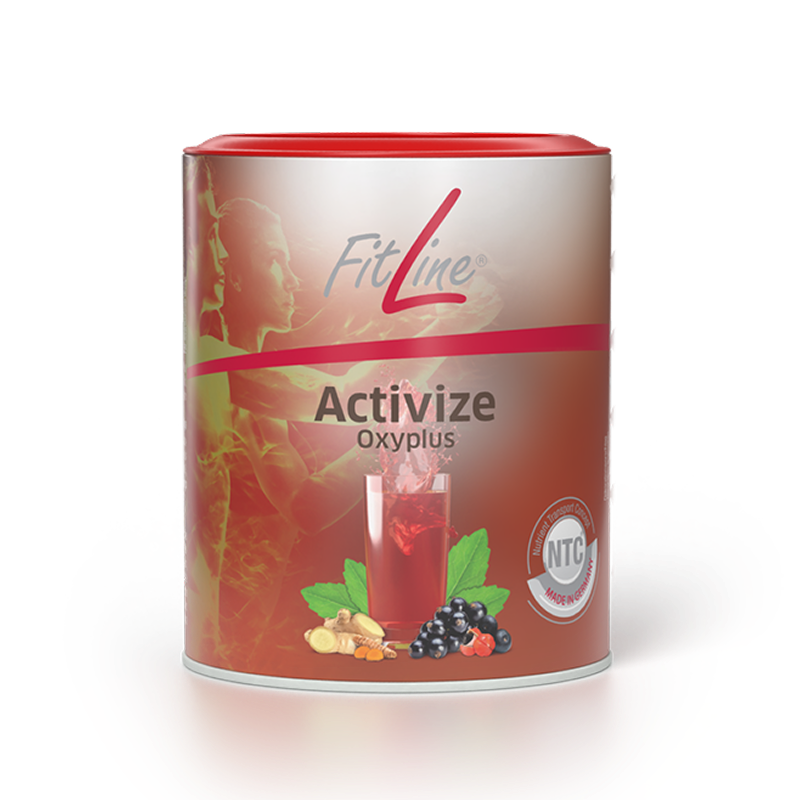
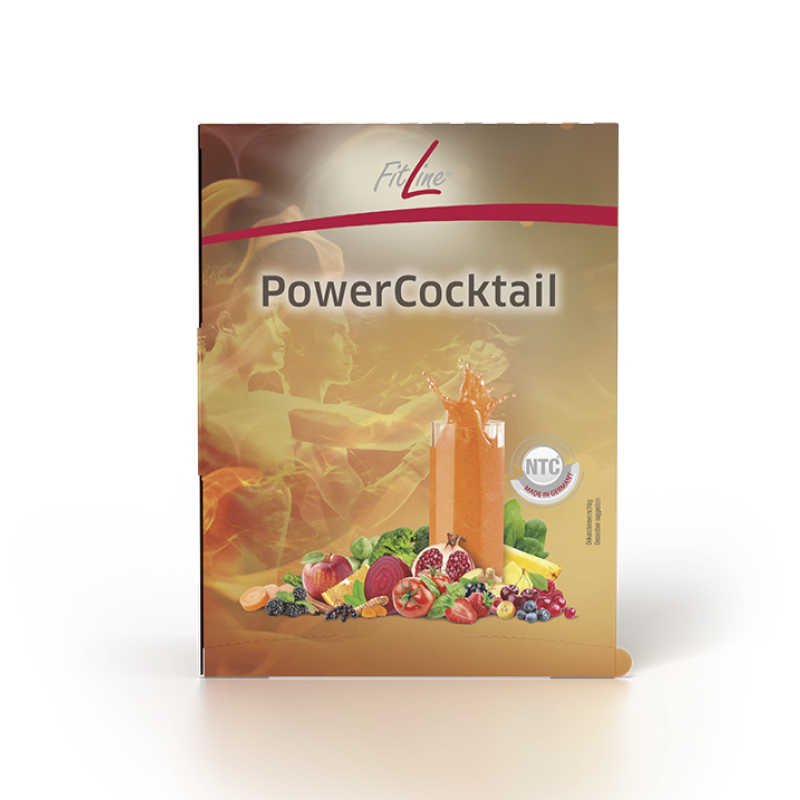
If you want to dig into a direct comparison, I've written a dedicated piece: FitLine vs Herbalife. If you'd simply like to try something with no commitment, here are the FitLine products and a 5% discount code for your first order. And if it's not for you, that's completely fine: I hope this comparison was useful either way.
Frequently asked questions
1. Amway or Herbalife: which one is bigger? Amway, in terms of revenue and number of countries it operates in (order of magnitude: around $7–8 billion versus around $5 billion). But size tells you nothing about the quality of the product that ends up in your glass: it only tells you the company is larger.
2. Is Amway (Nutrilite) protein better than Herbalife protein? There's no objective answer that holds for everyone. Compare them with the labels in hand: protein source, grams of protein per real serving, sugars and additives, and of course taste (which is ultimately what determines whether you'll keep using it). The same EU claim applies to both: protein contributes to the growth and maintenance of muscle mass.
3. What does it really cost to start as an Amway or Herbalife distributor? In both cases you're looking at a fee or a starter kit in the range of a few tens of euros, not thousands. If someone asks you for far more, or pushes you to buy stock to reach a level, stop and verify directly through the company's official channels.
4. Are Amway and Herbalife pyramid schemes? No: they're direct-selling companies operating legally in the US, in Italy and in dozens of other countries, and compensation is tied to product sales. A pyramid scheme, which is illegal, pays for the recruitment of new people rather than the sale of real goods. That said, what I wrote above still stands: the vast majority of distributors, in any MLM, earn modest amounts. Assess the opportunity with the same cold eye you'd bring to opening your own business.
5. Why are you telling me about FitLine if this was a comparison between Amway and Herbalife? Because I told you from the first line: I'm a FitLine distributor, and hiding it would have been dishonest. The Amway vs Herbalife comparison you've just read is built on public information and it stands regardless of what you decide. If you choose Amway or Herbalife, you have my respect: what matters is that you choose based on real information, not inflated promises.
Comparing More Than Two Brands?
If you also want to see how a European alternative stacks up against both, read our FitLine vs Herbalife vs Amway three-way comparison.
💬 Not sure if FitLine is right for you?
Message me on WhatsApp: I reply personally and I'll tell you honestly whether it makes sense for your goal — even when the answer is no. No strings attached.
Or find out how to get 20% off your products.
Want to try FitLine with 5% off?
Message me on WhatsApp for a free consultation, or use my personal discount code to order now on the official store.
Discount code: de9affcf — valid on your first order.
Follow me on Facebook
One honest tip a day on supplements, nutrition and energy
On my page (in Italian) I share guides, comparisons and answers to the questions I get most often. No miracle promises: only what really works and what is just marketing.
Recommended Products for You
Selected based on the article you're reading


Author
Alfio Nicolosi
Independent FitLine Teampartner. Wellness and nutrition expert with years of experience helping people achieve their health goals.
Learn more