Informazione importante
Questo articolo è scritto da Alfio Nicolosi, Distributore Indipendente PM-International. I contenuti rappresentano opinioni personali ed esperienze del distributore e non costituiscono comunicazioni ufficiali di PM-International AG. FitLine® è un marchio registrato di PM-International AG.
In 30 seconds: a well-built high-protein diet is not "all meat and no bread". It is a normal calorie-restricted diet in which every meal contains 25-35 g of protein, adding up to 1.6-2 g per kilo of body weight a day. It does two things: it keeps you less hungry, because protein is more filling than carbohydrates and fat, and it helps you lose fat while holding on to muscle, because protein contributes to the maintenance of muscle mass. The weight loss itself still comes from the calorie deficit, not from the protein. Below you'll find a 7-day meal plan with the grams, a shopping list and the mistakes I made myself.
I'm Alfio Nicolosi, an independent FitLine Team Partner: I earn a commission on purchases made through my links. I lost more than 30 kg with a moderate calorie deficit, daily walking and, precisely, more protein at every meal. I am not a nutritionist: this meal plan is a practical example for a healthy adult, not a personalised diet. If you have a medical condition, particularly one affecting your kidneys, or you are pregnant, your plan should come from a professional.
Why more protein helps when you're dieting
Three reasons, all of them documented:
- It is more filling. Calorie for calorie, a protein-rich meal keeps hunger away for longer. It is the difference between arriving at dinner feeling calm and raiding the cupboard at 6 pm.
- It protects your muscles. In a calorie deficit the body doesn't only lose fat. An adequate protein intake, together with a bit of strength exercise, limits the loss of muscle. Protein contributes to the maintenance of muscle mass: that is an authorised claim in Europe.
- It costs more to digest. The body spends 20-30% of the calories in protein just digesting it, compared with 5-10% for carbohydrates and 0-3% for fat. It is a real advantage but a small one: we are talking about a few dozen calories a day, not a metabolism "switched on".
What protein does not do: it does not produce weight loss by itself and it does not make up for a calorie surplus. If you eat more than you use, you gain weight, even on chicken breast.
How much protein you need
| Situation | Protein per day | Example at 75 kg |
|---|---|---|
| Sedentary adult, stable weight | 0.8-1 g per kg | 60-75 g |
| Dieting to lose weight | 1.6-2 g per kg | 120-150 g |
| Dieting with strength training | 1.8-2.2 g per kg | 135-165 g |
If you have a lot of weight to lose, base the calculation on your target weight rather than your current one, otherwise the numbers become unrealistic. The full reasoning is in how much protein per day to lose weight.
The rule of thumb I use: a protein source the size of your palm at every main meal, plus one protein snack. That gets you to 110-140 g without weighing anything.
💬 Not sure whether FitLine is right for you?
Message me on WhatsApp: I reply personally and tell you honestly whether it makes sense for your goal, even when the answer is no. No commitment.
Or find out how to get 20% off the products.
Weekly meal plan: 7 days with the grams of protein
Portions are designed for roughly 1,600-1,800 kcal a day. If you are a tall or very active man, increase the carbohydrates (bread, rice, potatoes) rather than cutting the protein. The grams in brackets are the protein in each meal, rounded.
Monday
- Breakfast (28 g): 200 g Greek yoghurt (0-2% fat), 30 g oats, a handful of berries, 10 g walnuts.
- Lunch (35 g): 130 g grilled chicken breast, 60 g basmati rice, sautéed courgettes, a tablespoon of olive oil.
- Snack (12 g): 100 g cottage cheese and an apple.
- Dinner (32 g): 150 g baked cod fillet with cherry tomatoes, mixed salad, 50 g wholemeal bread.
Tuesday
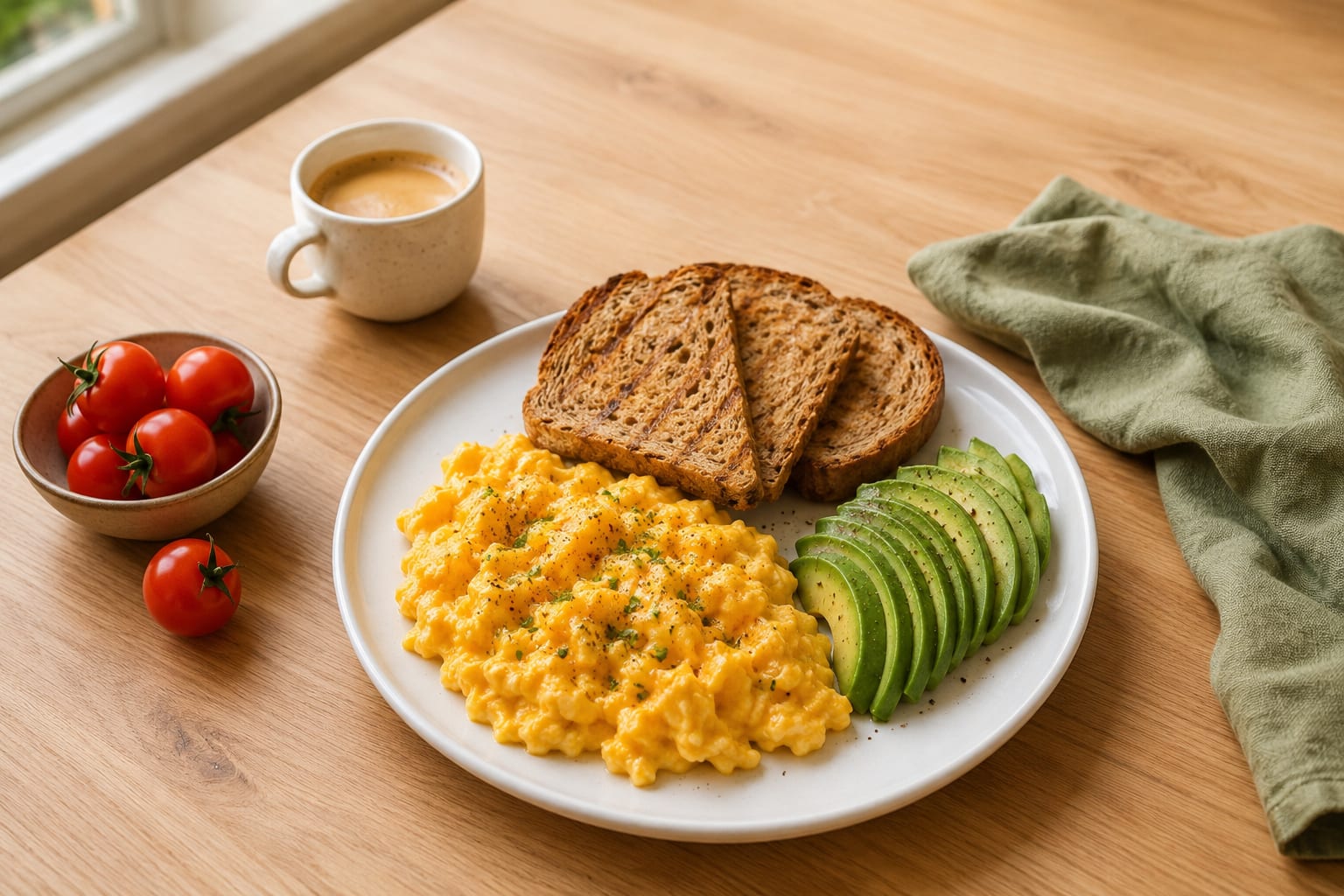
- Breakfast (25 g): 2 scrambled eggs, 50 g bresaola, a slice of toasted wholemeal bread.
- Lunch (30 g): spelt salad (60 g) with 120 g tuna in brine, chickpeas, rocket and tomatoes.
- Snack (10 g): a small Greek yoghurt.
- Dinner (33 g): 130 g turkey strips with peppers, steamed vegetables, 150 g potatoes.
Wednesday
- Breakfast (27 g): porridge made with 40 g oats, 200 ml semi-skimmed milk, 100 g skyr, cinnamon and half a banana.
- Lunch (28 g): 70 g wholewheat pasta with 150 g lentils and vegetables, Parmesan.
- Snack (12 g): 30 g Parmesan and a pear.
- Dinner (35 g): 150 g baked salmon, asparagus or broccoli, salad.
Thursday
- Breakfast (26 g): a savoury toastie with 2 slices of wholemeal bread, 60 g sliced turkey breast, 50 g ricotta and tomato. More ideas in savoury breakfast: 12 high-protein ideas.
- Lunch (34 g): 130 g chicken breast, 60 g quinoa, grilled vegetables.
- Snack (10 g): 150 g edamame or a handful of lupin beans.
- Dinner (30 g): an omelette made with 2 eggs and 100 ml egg whites with spinach, tomato salad, 50 g bread.
Friday
- Breakfast (28 g): same as Monday, with a different fruit.
- Lunch (32 g): 150 g mackerel or sardines (tinned in brine is fine), 200 g boiled potatoes, green beans.
- Snack (12 g): cottage cheese with cucumber and cherry tomatoes.
- Dinner (30 g): 180 g tofu stir-fried with vegetables and soy sauce, 60 g rice. Or 130 g chicken breast.
Saturday
- Breakfast (25 g): pancakes made with 1 egg, 100 ml egg whites and 40 g oat flour, topped with Greek yoghurt.
- Lunch (35 g): 130 g sliced lean beef steak, rocket, Grana Padano, cherry tomatoes, 50 g bread.
- Snack (10 g): Greek yoghurt.
- Dinner: free meal. Pizza with friends or whatever you like, with no guilt and no "making up for it" the next day. One free meal a week is what made my own journey sustainable.
Sunday
- Breakfast (26 g): 2 fried eggs, 60 g smoked salmon, a slice of rye bread.
- Lunch (30 g): 70 g pasta with a homemade lean meat ragù, salad.
- Snack (10 g): 30 g nuts and a yoghurt.
- Dinner (30 g): mixed pulse soup (200 g cooked weight) with 40 g Parmesan and vegetables.
Average total: 105-115 g of protein from the main meals and snacks listed. To reach 130-150 g, increase the portion of the protein source at lunch and dinner by 30-40 g, or add a second snack from the list of high-protein snacks.
Shopping list for the week
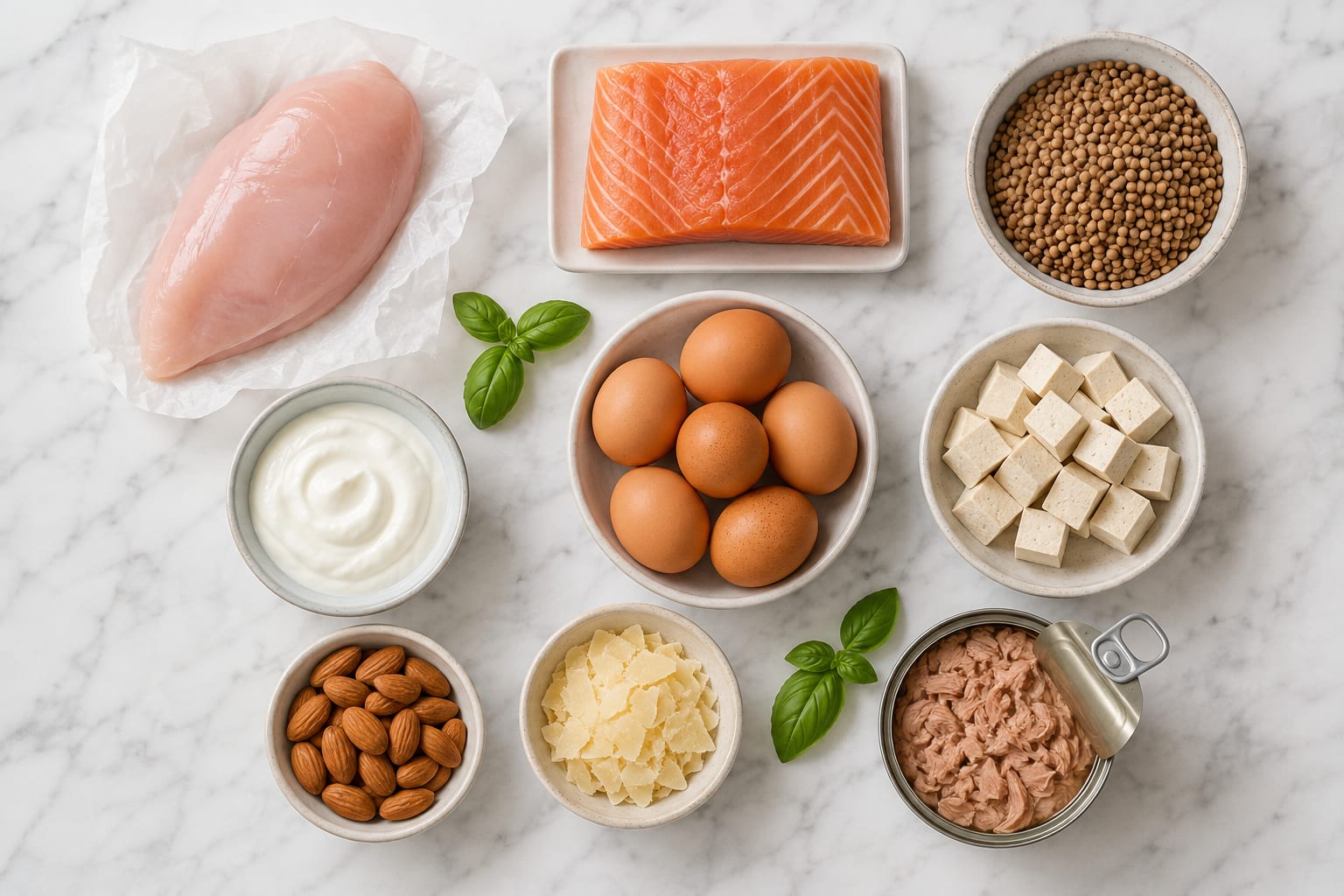
- Meat and fish: chicken breast 400 g, turkey 200 g, lean beef 130 g, lean mince 150 g, cod 150 g, fresh salmon 150 g and smoked salmon 60 g, mackerel or sardines 150 g, 2 tins of tuna in brine, bresaola 50 g.
- Eggs and dairy: 10 eggs, egg whites 250 ml, Greek yoghurt 1 kg, skyr 100 g, cottage cheese 250 g, ricotta 50 g, Parmesan 120 g, milk 500 ml.
- Pulses and plant proteins: lentils, chickpeas, mixed pulses (dried or tinned), tofu 180 g, edamame or lupin beans.
- Grains and starches: oats and oat flour, basmati rice, spelt, quinoa, wholewheat pasta, wholemeal and rye bread, potatoes.
- Vegetables and fruit: courgettes, peppers, broccoli, spinach, green beans, salad leaves, rocket, tomatoes, berries, apples, pears, bananas.
- Other: extra virgin olive oil, walnuts, mixed nuts, spices.
The table with the grams of protein per 100 g of each food is in high-protein foods: the foods richest in protein.
The mistakes I made (so you can avoid them)
- Cutting out carbohydrates completely. It works for two weeks, then come the tiredness, the irritability and the binge. Bread, pasta and rice stay, in normal portions.
- Forgetting the vegetables. More protein and less fibre means a sluggish gut. Vegetables at lunch and dinner, always, and water: at least 1.5-2 litres.
- All the protein at dinner. The body uses it better when it is spread out: 25-35 g per meal beats 10 g at breakfast and 80 g at dinner.
- Only meat. Mix it up: fish 2-3 times a week, pulses 2-3 times, eggs, low-fat dairy. Less red meat and fewer cold cuts, which are high in salt and saturated fat.
- Thinking protein doesn't count as calories. It does: 4 kcal per gram. A deficit is still a deficit.
- Not moving. Without a minimum of strength exercise (bodyweight is fine, twice a week), the extra protein does less to protect your muscles.
Who it isn't suitable for
- Anyone with kidney disease or reduced kidney function: protein intake must be set by your kidney specialist. In healthy people, intakes of up to 2 g per kg have not been shown to harm the kidneys, but "healthy" is something your test results tell you, not how you feel.
- Pregnancy, breastfeeding, teenagers: no do-it-yourself calorie-restricted diets.
- Anyone with gout or high uric acid: you need your doctor's advice on meat, fish and pulses.
- Anyone who has, or has had, an eating disorder: counting grams can do more harm than good.
What about protein shakes? Do you need them?
They are not necessary: the whole meal plan above is made of ordinary food. They become handy in two situations: when you can't reach your protein target through meals, or when there is one meal of the day you handle badly and you want a ready-made solution.
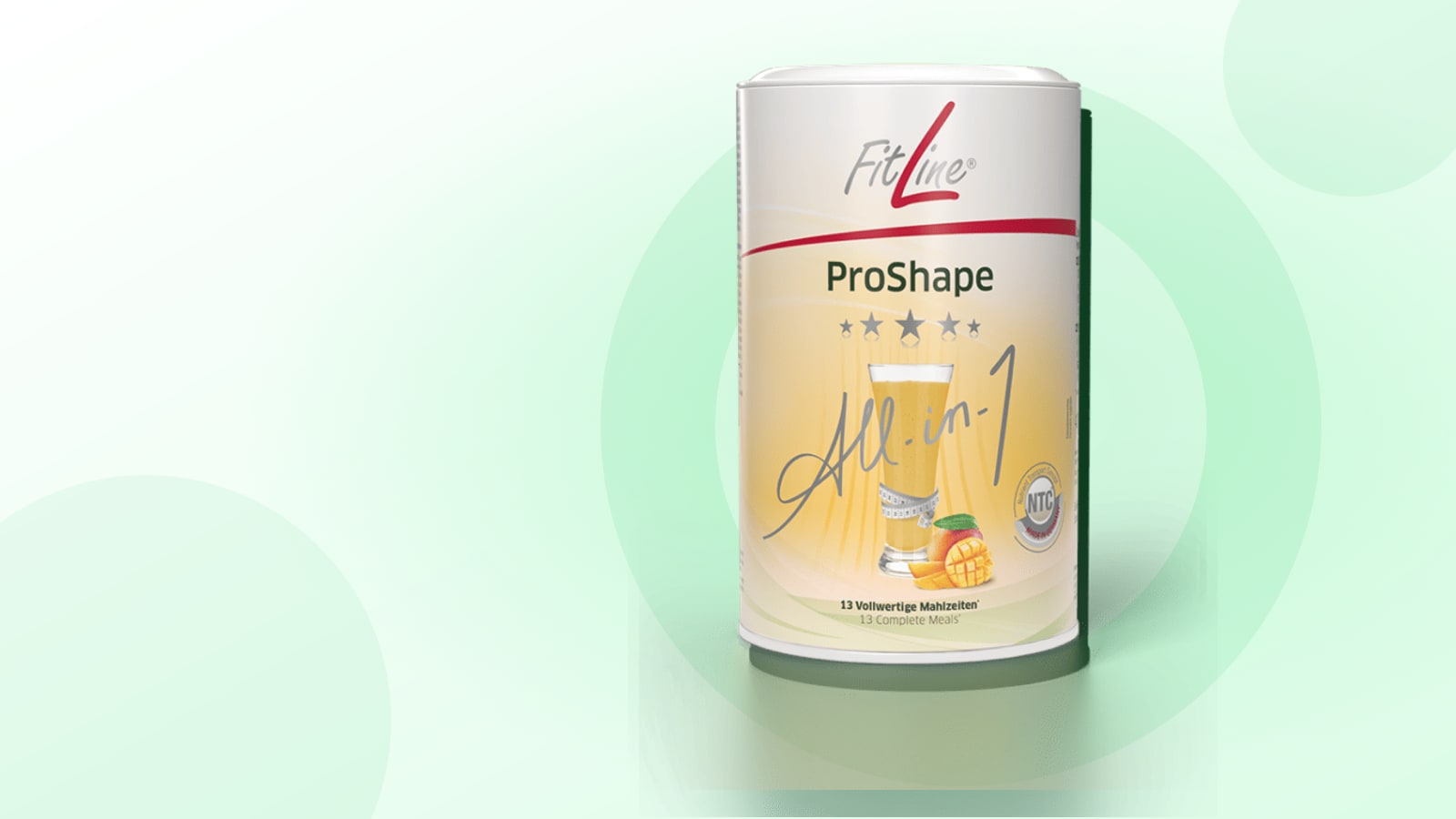
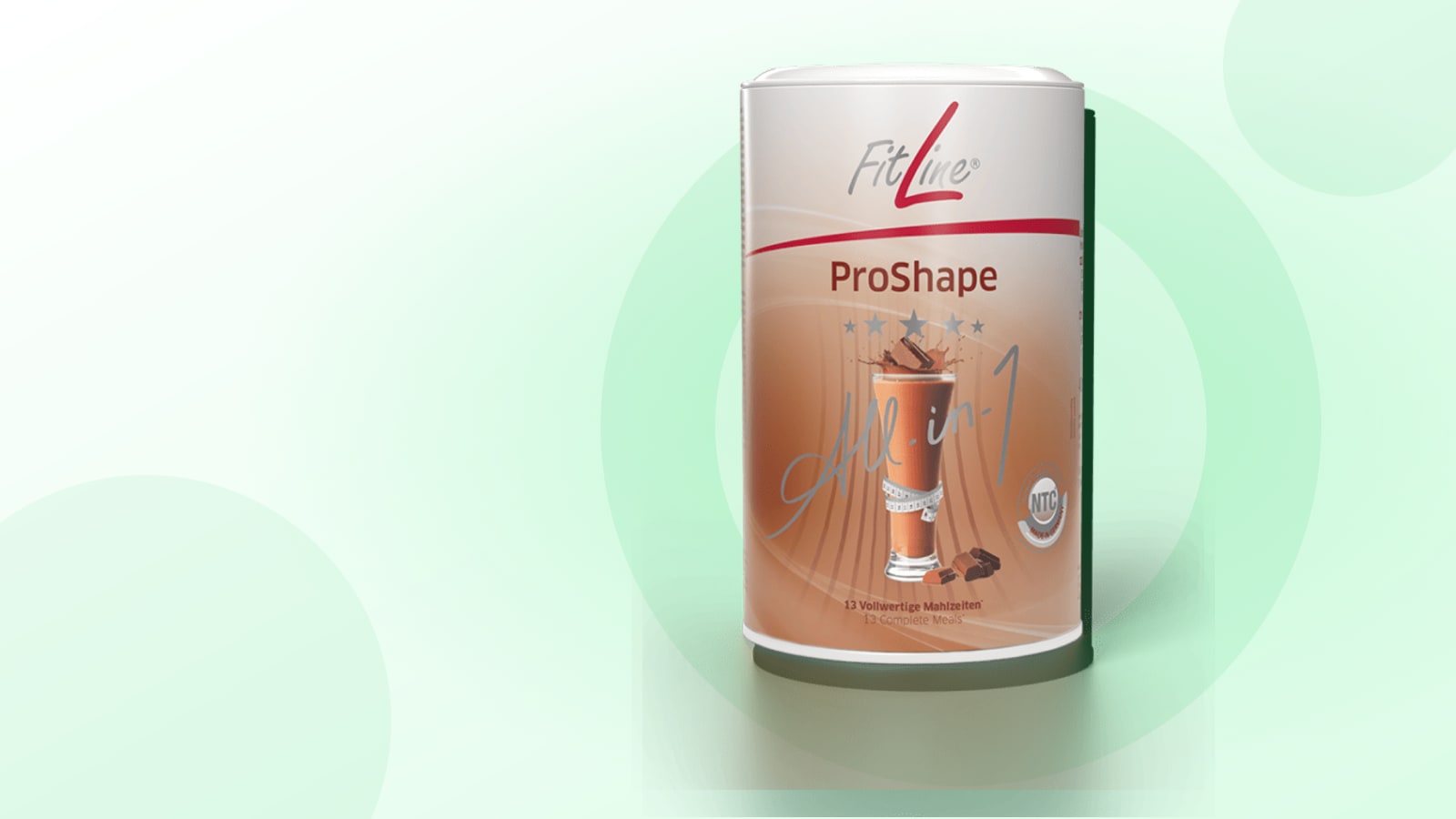
These are two different products. A whey or plant protein powder adds protein to a meal. A meal replacement takes the place of one, and by law it must also contain vitamins and minerals: substituting two daily meals of an energy-restricted diet with meal replacements contributes to weight loss. FitLine's version is ProShape All-in-1, under 250 kcal per serving, €43.69 for 13 servings (Italian list price; prices vary by country): I used it for about two months in place of dinner, the meal where I slipped up most. It is expensive compared with a whey, and it does nothing that a balanced 250 kcal meal doesn't also do: the only advantage is convenience. The comparison between the different types is in the protein shake ranking.
Food supplements should not be used as a substitute for a varied, balanced diet and a healthy lifestyle.
What to expect, without illusions
With a moderate deficit, the healthy pace is 0.5-1 kg a week. In the first week the scales may drop more than that: it is mostly water, because you are eating less salt and less sugar. Then the pace slows down, and that is normal. Some weeks the scales won't move even though you are doing everything right. Weigh yourself once a week, at the same time of day, and look at the trend over a month, not at a single day.
What you should notice early on is something else: less hunger between meals, fewer sweet cravings after dinner, more energy in the afternoon. Those are the signs that the plan is sustainable, and sustainability is the only thing that matters: it took me more than a year, not 30 days.
Frequently asked questions
How much weight can you lose on a high-protein diet? It depends on the calorie deficit, not on the protein. With 400-500 kcal less per day, around 0.5 kg a week. Be wary of anyone promising 5 kg in 10 days: it is water, and it comes back.
Can you do it without meat? Yes. Eggs, dairy, pulses, tofu, tempeh, seitan and fish (if you eat it) are enough. On a vegan diet you need to pay more attention to food combinations and to vitamin B12, which has to be supplemented.
Is a high-protein diet bad for your kidneys? In people with healthy kidneys, the intakes given here have not been shown to be harmful. With kidney disease, even mild, your protein intake must be agreed with your doctor.
Can I eat pasta? Yes: 60-80 g, paired with a protein source (pulses, tuna, lean ragù) and a vegetable. The meal plan above includes it three times.
How long can you follow it for? Because it is a balanced diet with more protein, and not a ketogenic or "protein only" diet, you can follow it long term. Once the weight loss phase is over, you increase the carbohydrates and stay at around 1.2-1.6 g of protein per kg.
Is protein better at breakfast or at dinner? Better at every meal. If you have to choose where to start, start with breakfast: it is the meal where almost everyone eats the least protein.
Conclusion
The high-protein diet that works is the least spectacular one: a moderate deficit, 25-35 g of protein at every meal, vegetables always, carbohydrates in normal portions, one free meal a week and half an hour of walking. It is not a shortcut and it promises no miracles, but it is the only pattern I managed to follow for long enough to lose 30 kg and keep them off.
Read also:
- What to eat to lose weight
- High-protein breakfast for weight loss: recipes
- Losing 10 kg: the realistic plan
💬 Not sure whether FitLine is right for you?
Message me on WhatsApp: I reply personally and tell you honestly whether it makes sense for your goal, even when the answer is no. No commitment.
Or find out how to get 20% off the products.
FitLine is a registered trademark of PM-International AG. This site is run by an independent Team Partner and is not the company's official website. The information is for educational purposes and does not replace medical advice.
Want to try FitLine with 5% off?
Message me on WhatsApp for a free consultation, or use my personal discount code to order now on the official store.
Discount code: de9affcf — valid on your first order.
Follow me on Facebook
One honest tip a day on supplements, nutrition and energy
On my page (in Italian) I share guides, comparisons and answers to the questions I get most often. No miracle promises: only what really works and what is just marketing.
Recommended Products for You
Selected based on the article you're reading


Author
Alfio Nicolosi
Independent FitLine Teampartner. Wellness and nutrition expert with years of experience helping people achieve their health goals.
Learn more